Repeatable joint geometry
A practical advantage for repetitive site work and programme-led installation.
A precast concrete connection component used to align and support compatible pipe joints in drainage, irrigation and utility networks.
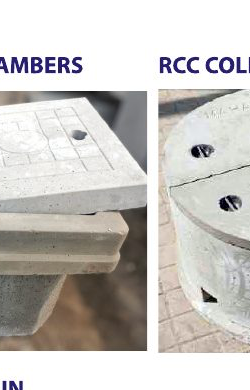
RCC Collars are selected with the mating pipe diameter, joint configuration and installation environment in mind. Factory production supports consistent geometry, but field performance still depends on bedding, alignment, joint packing or sealing and adequate restraint. Final dimensions must be matched to the approved pipe and drawing. Super Cement Articles manufactures the system under controlled factory conditions and supports project teams with drawing-led product selection, production coordination and dispatch planning.
A practical advantage for repetitive site work and programme-led installation.
Developed to improve consistency between units and reduce avoidable site variability.
Supports coordinated installation when used with the approved preparation and handling method.
Final performance depends on correct product selection and project-specific detailing.
The following applications are typical rather than exhaustive. Loading, geometry, hydraulic duty, exposure, authority requirements and interface details must be checked for the actual project before manufacture.
Coordinate the product with adjacent works, safe access, construction sequence and the approved consultant or authority detail.
Coordinate the product with adjacent works, safe access, construction sequence and the approved consultant or authority detail.
Coordinate the product with adjacent works, safe access, construction sequence and the approved consultant or authority detail.
Coordinate the product with adjacent works, safe access, construction sequence and the approved consultant or authority detail.
Catalogue references help identify the product family. The final order must be tied to approved dimensions, quantities, performance requirements and installation details.
Super Cement Articles operates documented quality, environmental and occupational-safety systems. Applicable drawings, materials, inspection points and acceptance requirements are agreed for the product and project scope. Standards or authority approvals should only be claimed where they specifically apply.
RCC Collar is a precast concrete connection component used to align and support compatible pipe joints in drainage, irrigation and utility networks.
Typical applications include stormwater pipe joints, road-crossing drainage, irrigation lines. Final suitability depends on the approved project layout and service conditions.
The catalogue establishes the available product family. Exact size, configuration and availability should be confirmed against the current approved drawing and production programme.
Match pipe outside diameter, confirm joint and seal detail, and coordinate the remaining interfaces before an order is released.
Yes. Share drawings, quantities, location, loading or hydraulic requirements and programme information so the team can review the appropriate configuration.
Provide the application, required quantity, site location, relevant dimensions, target programme and any consultant or authority specification that applies.
The contractor should prepare the supporting bed, footing or receiving structure to the approved line, level and detail. Product placement cannot compensate for inadequate support.
Yes. Joint, connection, restraint and sealing details depend on the product and exposure. They must follow the approved drawing and installation method.
Finish and visible appearance can be reviewed within the available production options. Samples or approved references should govern architectural surfaces.
Relevant product, material and inspection documentation can be discussed during technical review, subject to the product scope and project requirements.
No. Catalogue imagery is a product reference. Manufacture and installation must follow the latest approved project-specific drawing and specification.
Use the contact form and attach the schedule or drawing. The commercial and technical teams can then confirm scope, availability, logistics and the next steps.
We will review the application, product configuration, delivery considerations and information required for a responsible quotation.